What 1,517 Applications Tell Us About the Future of Tech in Northern Nigeria
When we opened applications for the Hausa Tech Scholarship 2026, we knew there was a need for accessible technology education. What we did not know was just how much demand there would be.
We received 1,517 applications. Behind that number are young people from across Northern Nigeria, other parts of Nigeria, and even outside the country people looking for an opportunity to learn, build, transition into technology, advance their careers, and create new possibilities for themselves and their communities. We analysed the application data, and the numbers tell a story worth paying attention to.
A Young Generation Looking for Opportunity
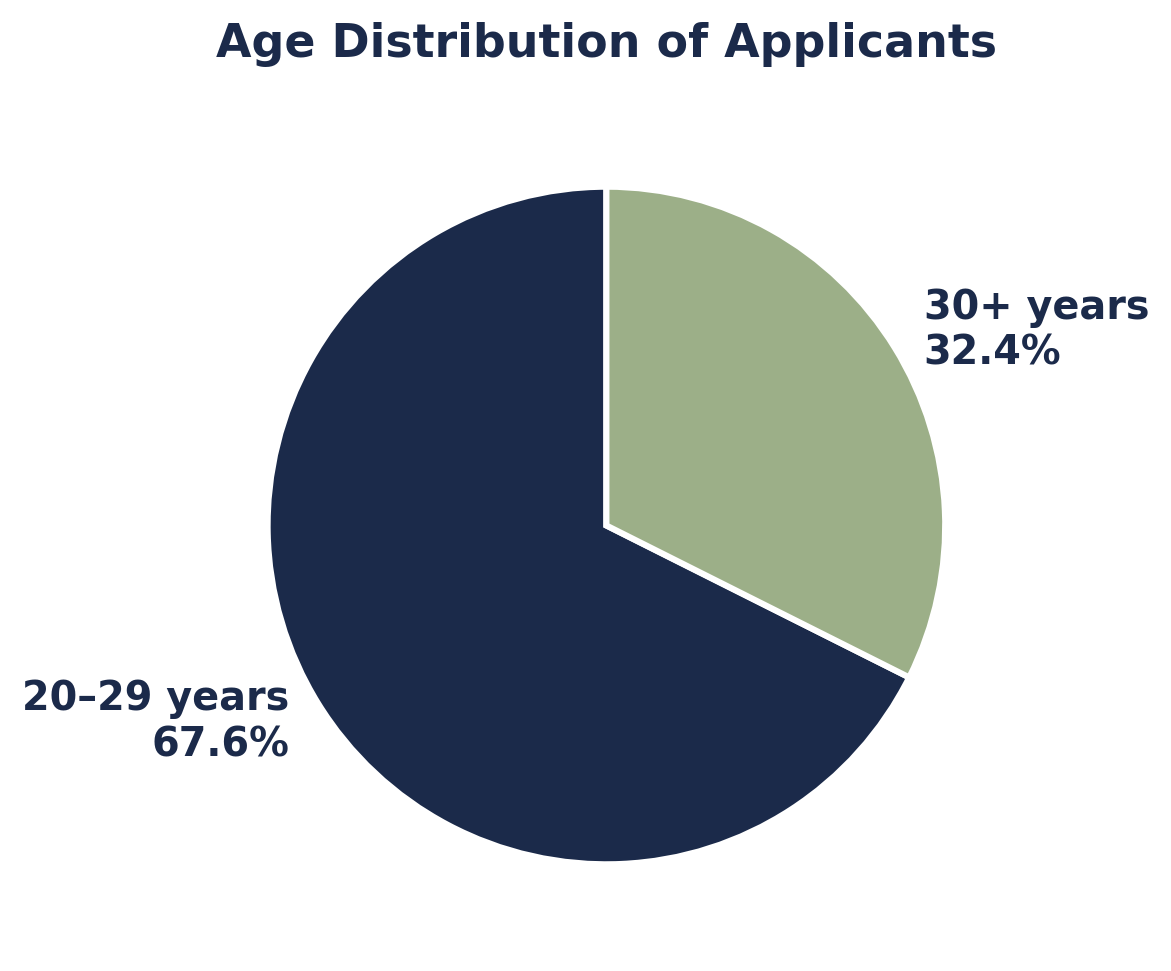
Among applicants with valid age data, the median age was 26, and 67.6% were between 20 and 29 years old. This is a generation entering the workforce, building careers, starting businesses and figuring out how technology can fit into their futures. The applicant pool included students, educators, creatives, entrepreneurs, engineers, technology professionals and people from a range of other fields. People are actively looking for ways to build skills that can move their lives and careers forward.
The Demand for Technology Skills Is Unmistakable
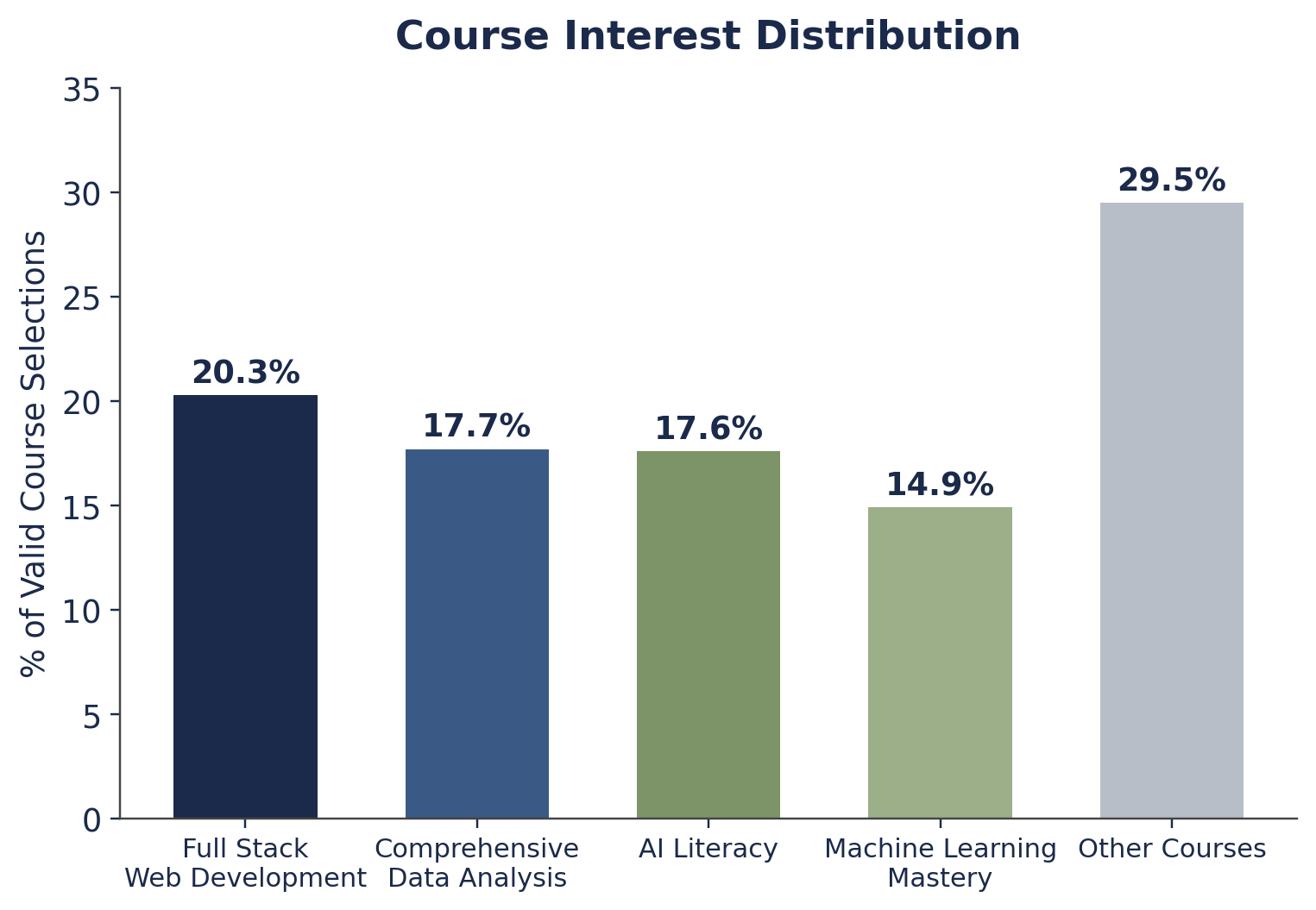
The strongest demand was concentrated around four areas, together accounting for 70.5% of valid course selections: Full Stack Web Development (20.3%), Comprehensive Data Analysis (17.7%), AI Literacy (17.6%), and Machine Learning Mastery (14.9%). Applicants were not only asking for general digital skills they were showing strong interest in software development, data, artificial intelligence and machine learning, areas increasingly shaping the future of work. AI Literacy alone attracted 227 applicants, and when the final 50 scholarships were awarded, 25 of those places went to AI Literacy.
The Geography Tells Another Story
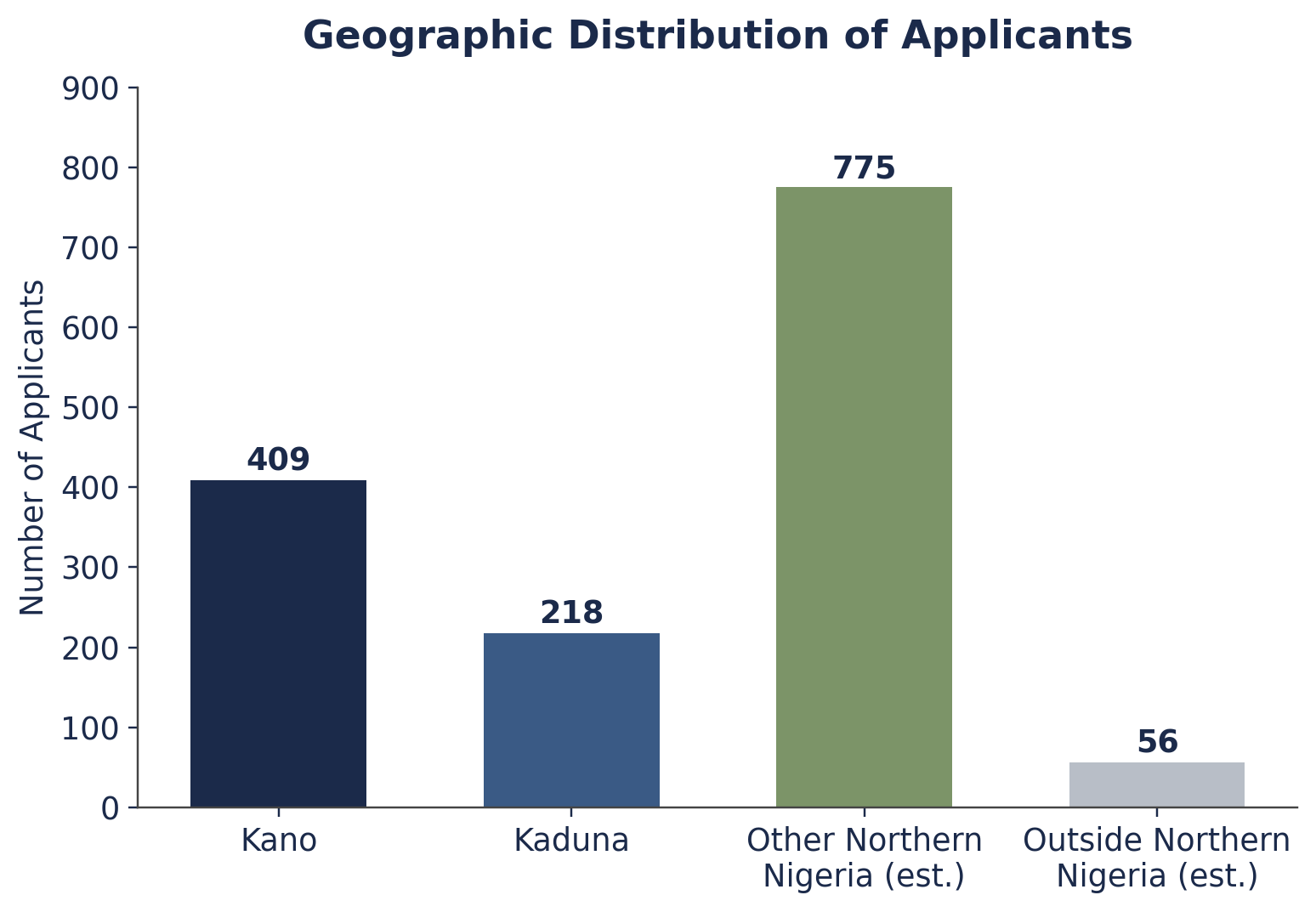
The scholarship was designed with Northern Nigeria in mind, and the applications strongly reflected that. Among the named application records analysed, 96.2% were classified within Northern Nigeria. The North-West accounted for the largest concentration, with Kano and Kaduna standing out significantly: Kano recorded 409 applicants, while Kaduna recorded 218. Together, those two states accounted for approximately 43% of all named application records.
But the story did not stop there. Applications came from across Northern Nigeria, including the North-East and North-Central, as well as from other parts of Nigeria. There was international interest too we identified applications connected to Niger Republic, Benin Republic, Ghana, the United States, Indonesia, Libya and Saudi Arabia, including one applicant from Cotonou, Benin Republic. So while Northern Nigeria remained the heart of the application pool, the call reached further than the region.
Access Is Not Just About Opportunity, It Is About Infrastructure
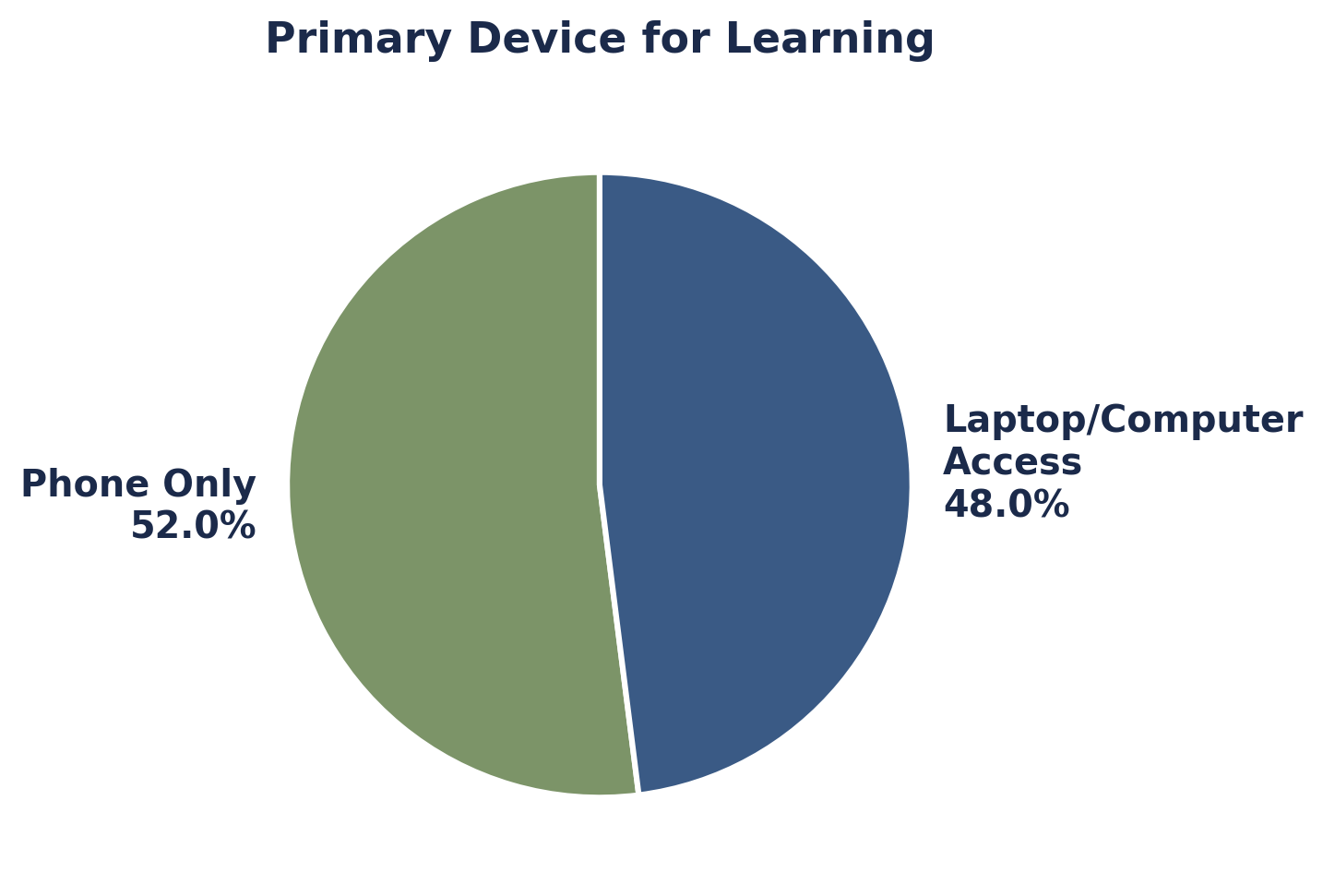
The data also gave us a glimpse into how applicants would actually access their learning. 91.8% of respondents with valid data reported regular internet access that sounds encouraging. But there is another important number: 52.0% primarily rely on a phone for learning. For a programme teaching skills such as web development, data analysis, machine learning and AI, this distinction matters. Having internet access does not necessarily mean having the same capacity to learn, practise and build. Digital inclusion is not simply about getting people online it is also about making learning accessible within the realities of the devices, connectivity and resources people have available.
What Are People Hoping to Gain?
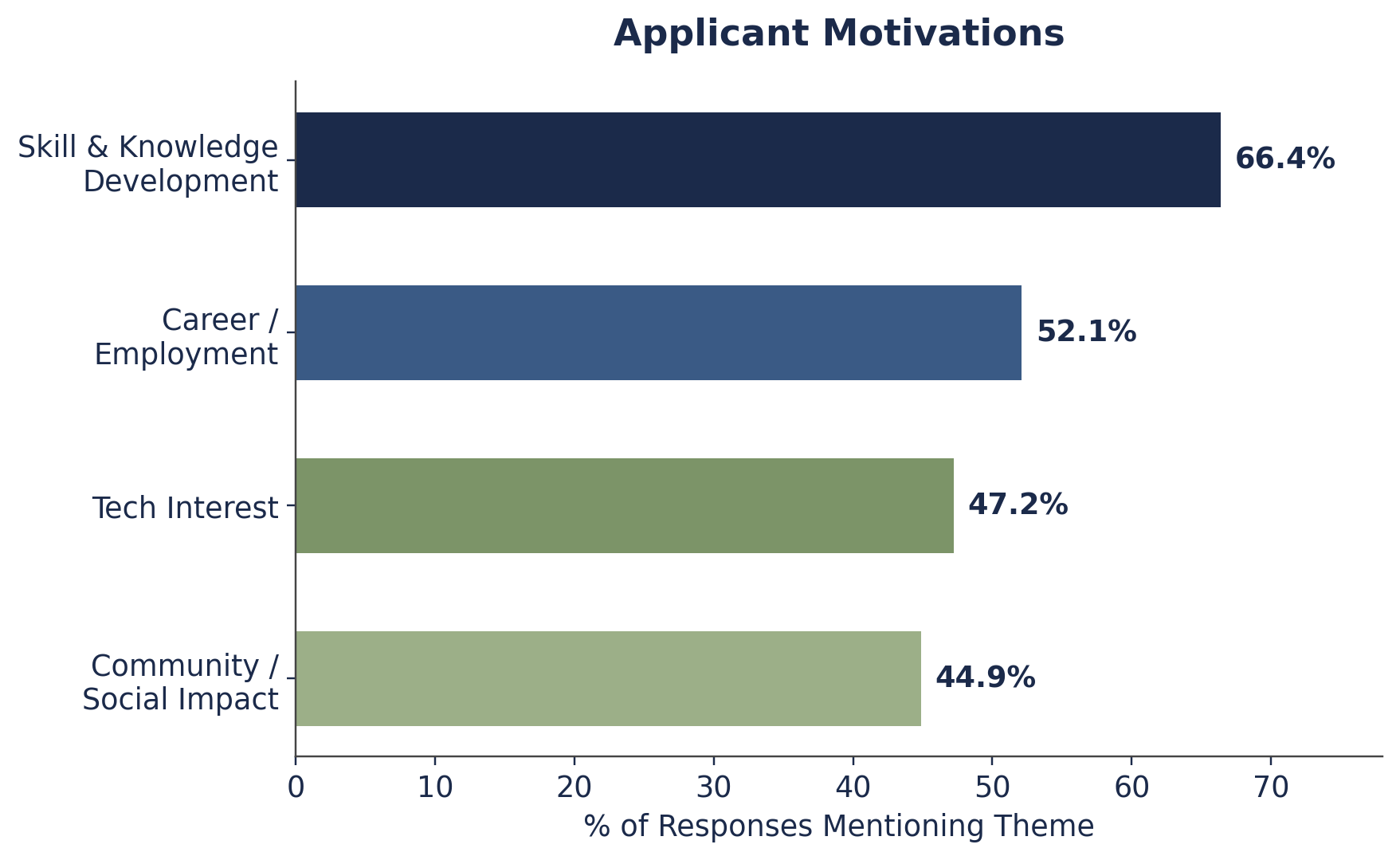
When applicants were asked why they wanted the scholarship, their answers revealed several recurring motivations: skill and knowledge development (66.4%), career or employment (52.1%), tech interest (47.2%), and community or social impact (44.9%). Many applicants were not simply asking, "What can this scholarship give me?" They were also thinking about, "What can I do with what I learn?" That distinction matters technology education can become more than an individual career opportunity when the knowledge acquired is taken back into businesses, classrooms, communities and local economies.
And Then There Was the Gender Story
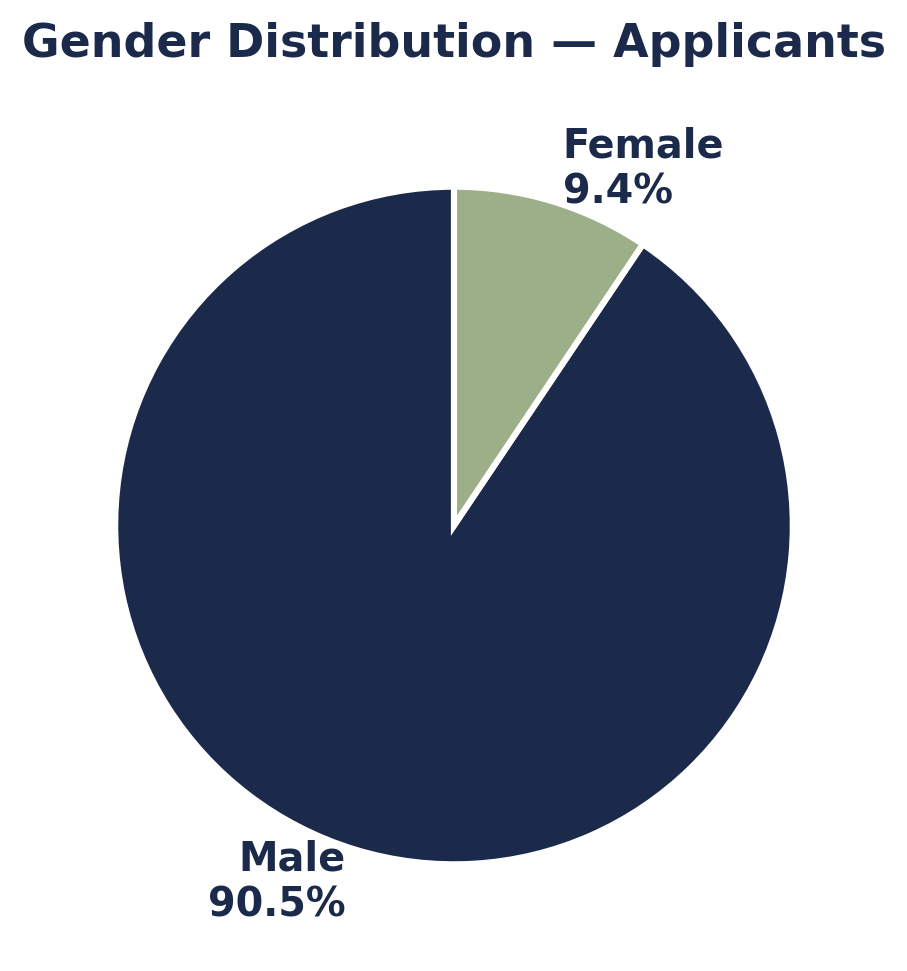
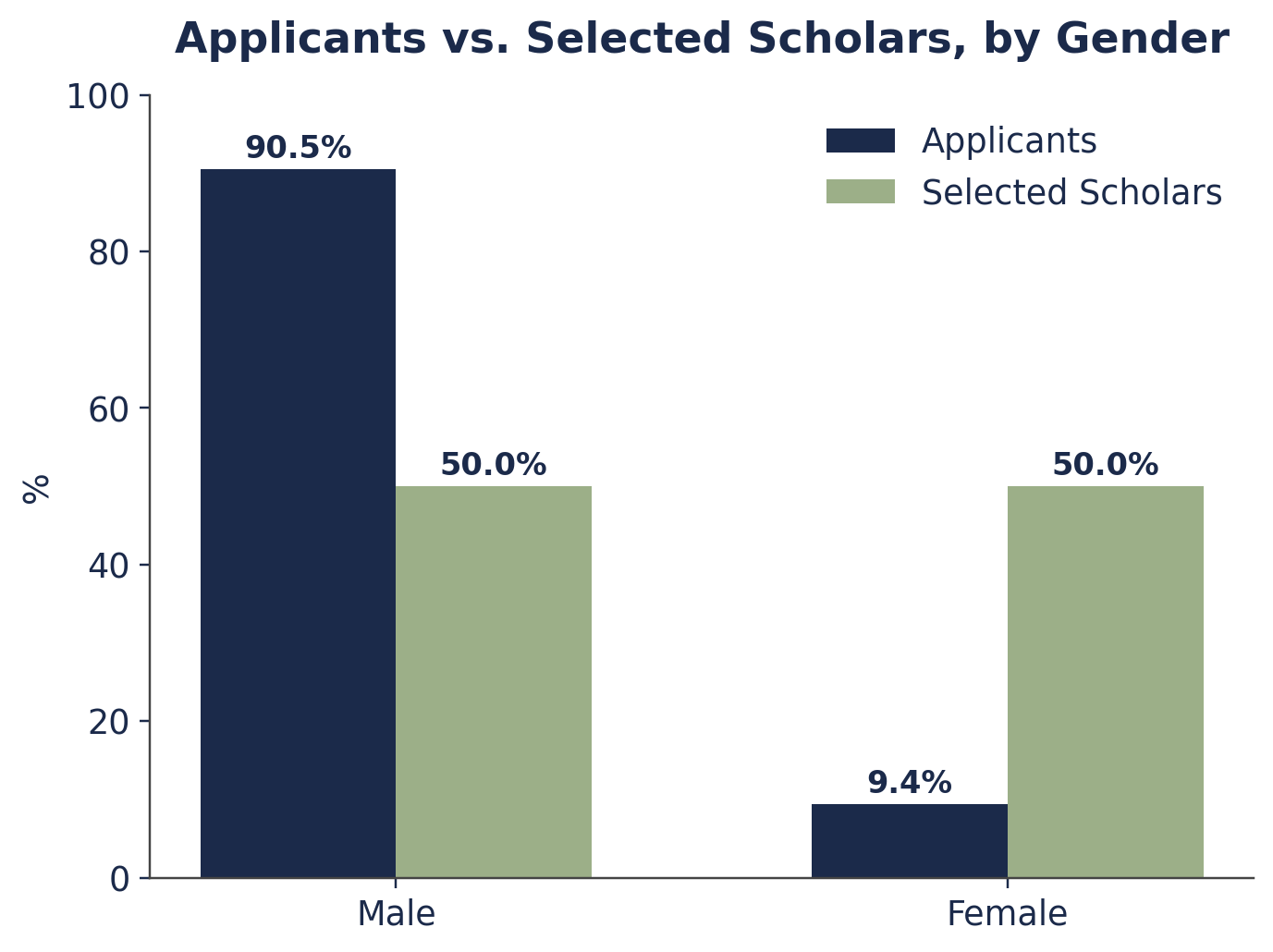
The application pool was heavily male-dominated. Among valid gender responses, 90.5% were male and 9.4% were female. That imbalance is something we have to take seriously. But the final scholarship cohort tells a very different story: of the 50 scholars selected, 25 are women and 25 are men 50% female, 50% male. Women represented only 9.4% of valid applicants, yet they represented half of the selected scholars. This does not erase the participation gap at the application stage. Instead, it raises an important question for future programmes: how do we get more women into the room in the first place?
50 Scholarships. 1,347 Retained Applicants.
After the application and cleaning process, 1,397 records were retained, with 1,347 applicants represented in the final applicant pool used for the selection analysis. From that pool, 50 scholars were selected a selection rate of roughly 3.7%, or about 1 place for every 27 retained applicants. Behind every selected scholar were many other applicants who also demonstrated ambition, interest and a desire to learn. The competition tells us something important about the scale of demand: there are many people looking for access to technology education. The challenge is ensuring that opportunities like this continue to grow alongside that demand.
What the Data Tells Us
The Hausa Tech Scholarship 2026 application data gives us more than a collection of numbers. It shows us a young population actively seeking skills. It shows strong demand for AI, data, software development and emerging technologies. It shows that Northern Nigeria has a significant pool of people interested in technology and digital opportunity. It shows that applicants are thinking about careers, income, community impact and their futures. And it shows that access still has layers, from internet connectivity to the device someone uses to learn.
Most importantly, it shows that the appetite is already there. The question is what we do with it. At Da Hausa Initiative, we believe technology education should not be limited by geography, background or access to expensive training. The Hausa Tech Scholarship is one step towards creating more pathways for people to learn, build and participate in the digital economy. 1,517 applications gave us the data. 50 scholars gave us the first cohort. Now, we are looking forward to seeing what they build with the opportunity.
How You Can Help Us Meet This Demand
1,347 qualified applicants. 50 seats. That gap is the clearest case we can make for why this programme needs to grow, and it is also where partners, sponsors and donors come in. There are a few ways to be part of what comes next.
Sponsor a scholar or a full cohort. Funding directly expands how many of the 1,297 qualified applicants we were unable to place this round get a seat next time. Back a specific track: AI Literacy, Data Analysis, Full Stack Development or Machine Learning each has demonstrated demand and a ready applicant pool. Help close the access gap: 52% of applicants learn primarily on a phone, so device and connectivity support are as valuable as tuition funding. Partner with us on outreach: we saw what deliberate selection did for gender balance, and the same intentionality applied earlier, at the application stage, could close that gap even further.
1,297 qualified applicants are still waiting on the next cohort. What we build next depends largely on who joins us in building it. If any of this resonates with your organisation's own goals around education, digital inclusion or opportunity in Northern Nigeria, we would welcome the conversation. Reach out to dahausainitiative@gmail.com to learn more about partnering on the next cohort.