Financial Access and Financial Learning in Hotoro
Insights from our August 2026 mini survey
Having a financial account and feeling confident managing money are different measures. Our Hotoro Mini-Survey explored both, alongside saving, borrowing and awareness of Islamic finance.
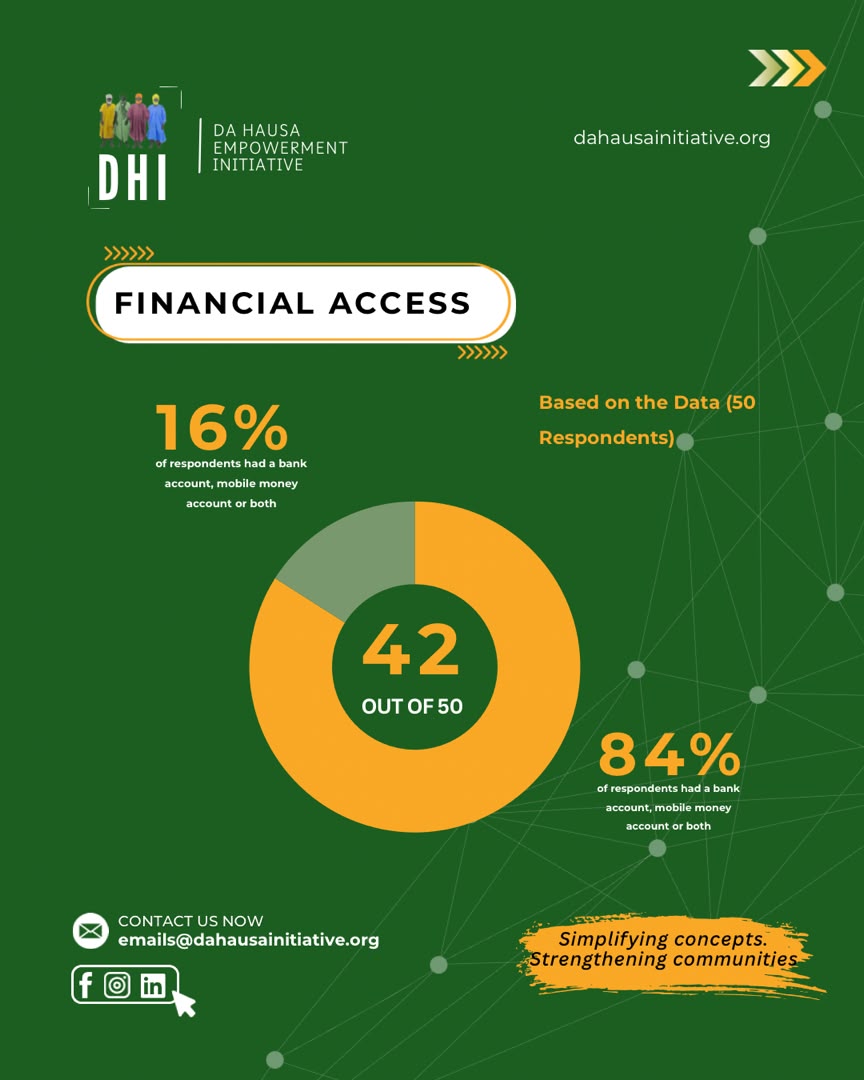
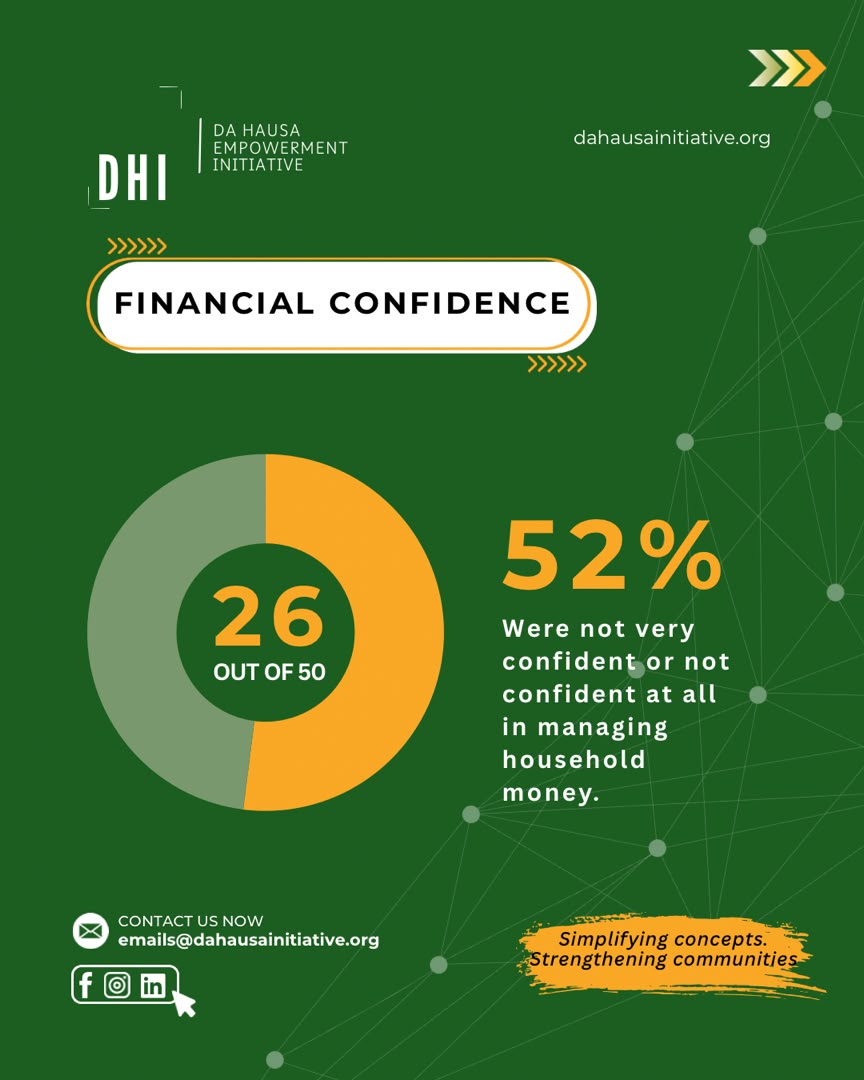
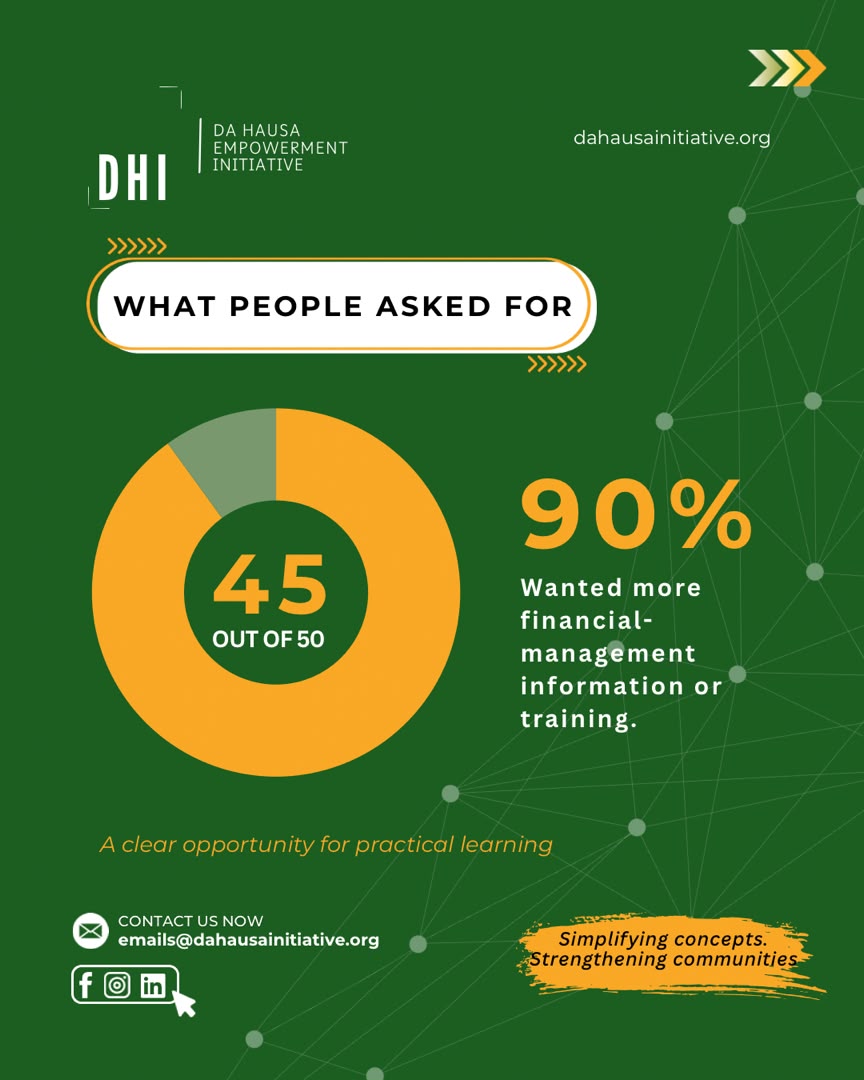
Among the 50 people surveyed in August 2026, 42 reported having a bank account, mobile-money account or both. Twenty-six said they were not very confident or not confident at all in managing household money, and 45 wanted more information or training.
These responses give DHI a practical starting point for community financial education. They also remind us to look beyond account ownership when asking what people need from financial services.
Financial constraints matter
The most frequently selected reason for not using formal financial services more was “No money to save/transact”. Twenty-eight respondents chose this answer.
Practical financial education can help people understand their options and make informed decisions. It also needs to recognise the financial pressures people face. A lack of money cannot simply be treated as a lack of knowledge.
Informal channels were part of respondents’ financial lives. Eighteen reported informal saving in the previous three months, while 29 reported borrowing from informal sources in the previous year. Listening to how people already manage money should inform the design of any learning programme.
Awareness and use differed
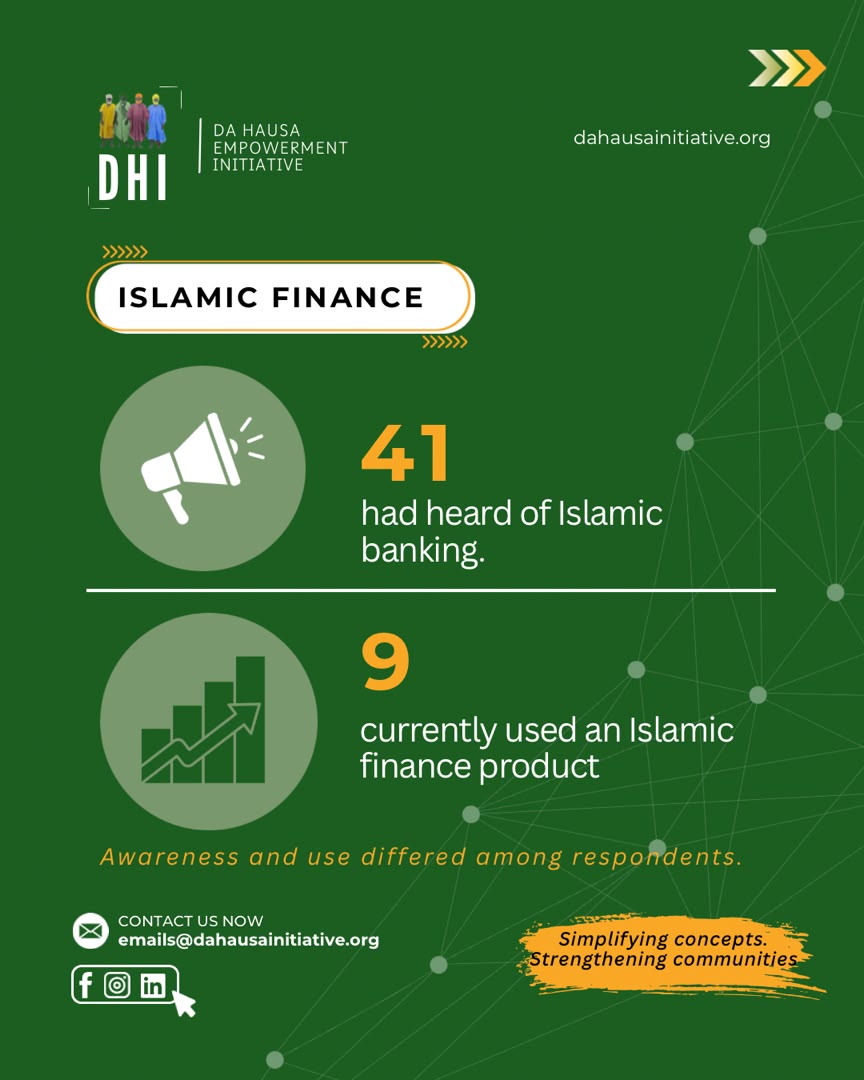
Forty-one respondents had heard of Islamic banking before the interview. Nine reported currently using an Islamic or non-interest financial product or service.
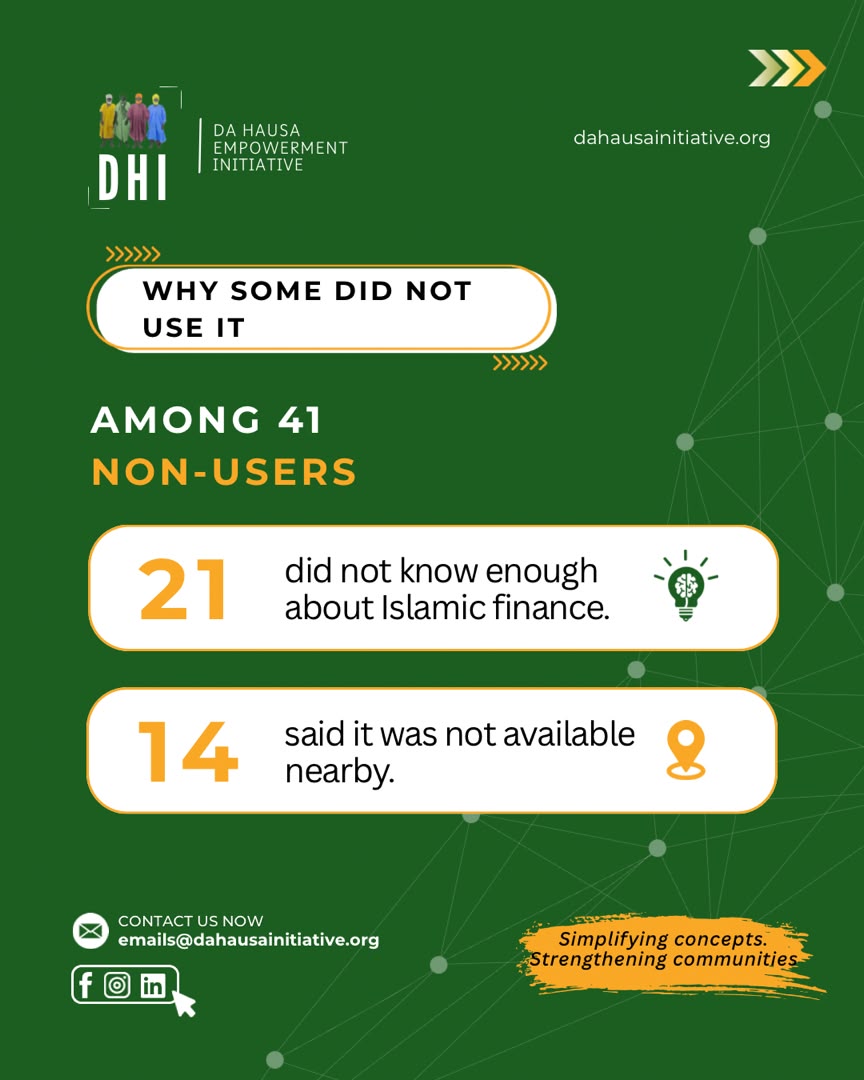
Among the 41 non-users, 21 said they did not know enough about it, while 14 said it was not available nearby. These answers suggest that information and access both deserve attention.
Forty-nine of the 50 respondents said they would be interested in an Islamic or non-interest financial product if it were easily available. This is conditional interest. It does not mean that everyone would adopt a product or that a particular product would meet their needs.
Trusted conversations offer a starting point
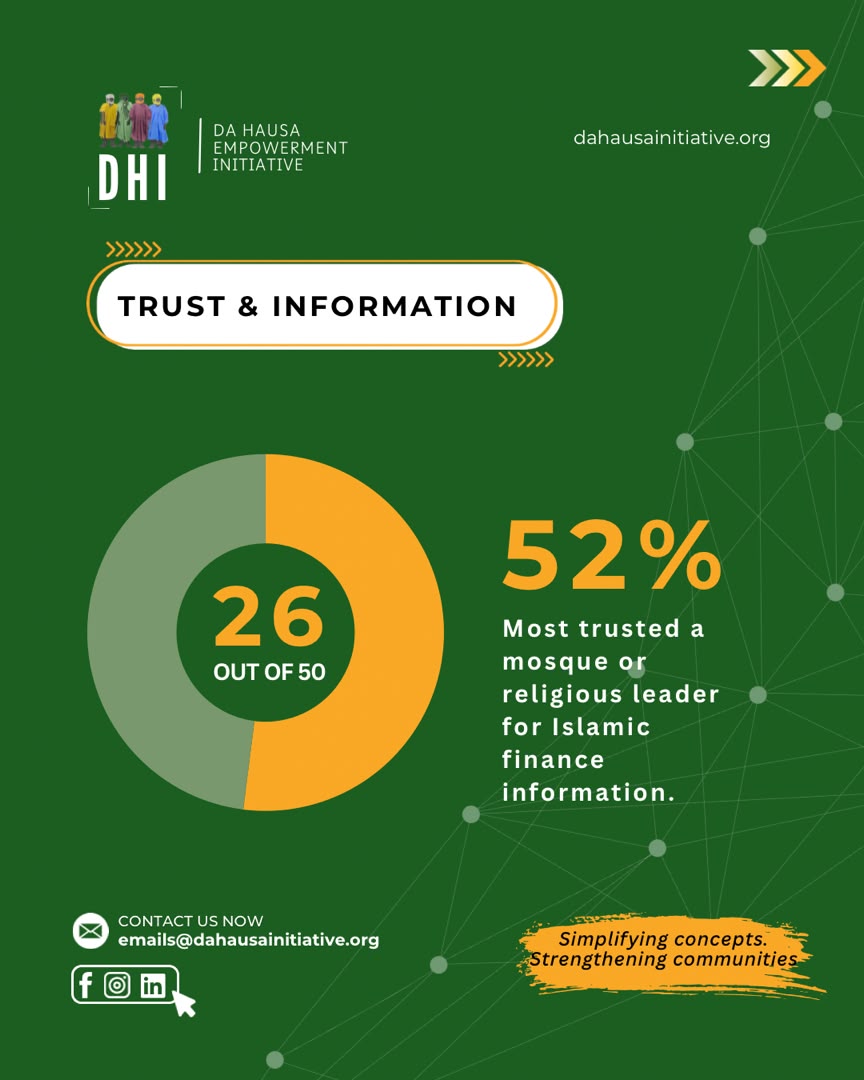
Asked which source they would most trust for learning about Islamic finance, 26 respondents selected a mosque or religious leader. Nine selected bank staff and six selected a community workshop or training session.
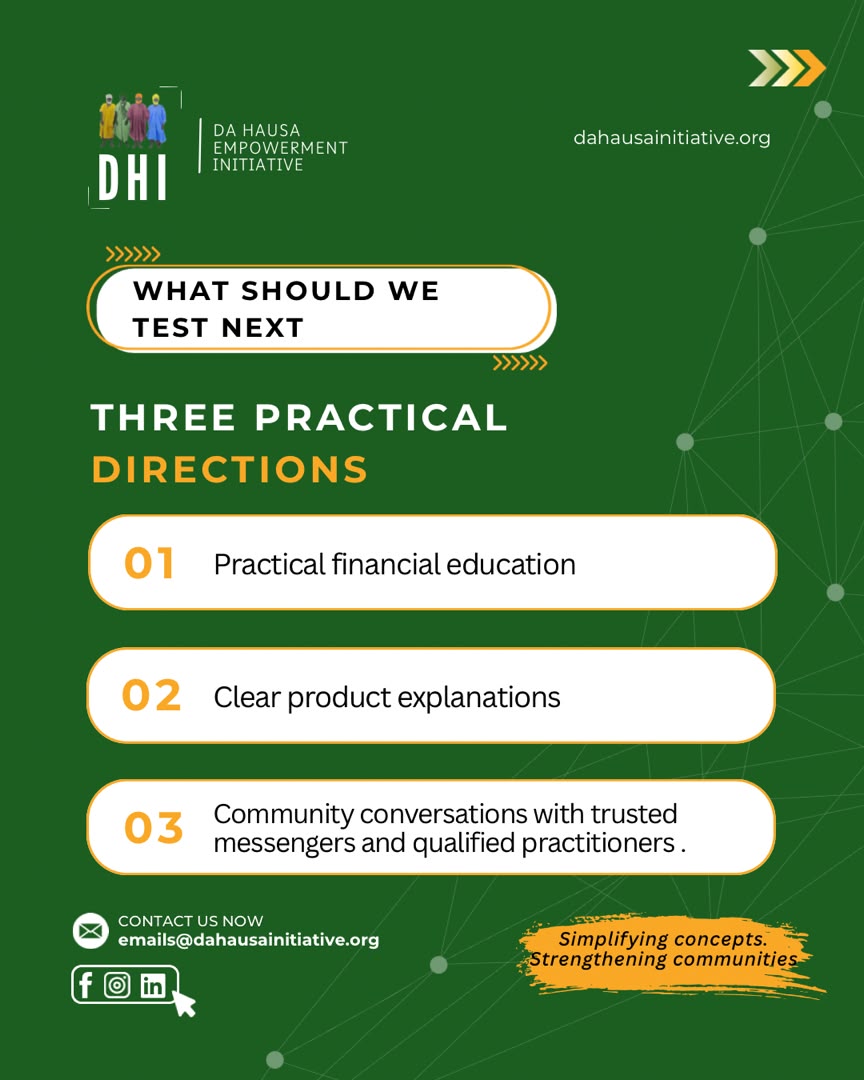
For DHI, this suggests an approach worth testing: community conversations that involve trusted local messengers and qualified practitioners who can explain products clearly. Participants should be able to ask about terms, costs, eligibility and where services can be accessed.
From findings to a useful programme
The next step is to test practical learning activities that respond to people’s everyday questions about household money, saving, borrowing and financial services. Follow-up should examine what participants understand, what they find useful and what difficulties remain.
The survey provides local evidence to guide that work. It does not establish that education alone will increase service use or resolve financial constraints.
About the survey
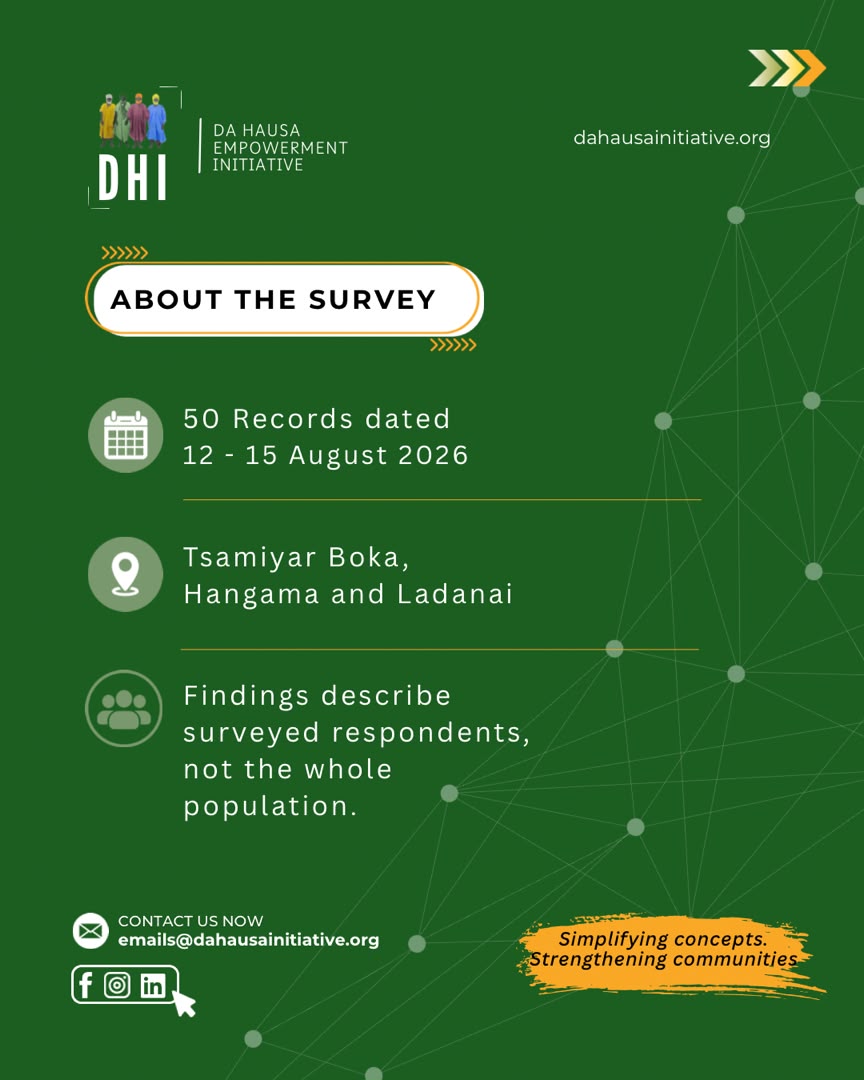
The analysis covers 50 records dated 12–15 August 2026 from Hotoro Tsamiyar Boka, Hotoro Hangama and Hotoro Ladanai: 23 women and 27 men. Fieldworkers started with a randomly selected house, selected every fifth house, and interviewed an available person. Another house was selected when nobody was available.
Because respondents were selected based on availability and households could be replaced, these findings describe the surveyed group. They should not be read as estimates for all Hotoro residents or Northern Nigeria. One October submission was excluded. Detailed product-awareness figures are withheld while three inconsistent answers are reviewed.
Source: Da Hausa Initiative, Hotoro Mini-Survey, KoboToolbox, August 2026.